




| 1. Duties of authors |
| 2. Guidelines for manuscript preparation |
| 3. Manuscript template |
| 4. Guidelines for registration |
| 5. Guidelines for manuscript submission |
Reporting standards
In reports of original research, authors hold a paramount responsibility: to present a factual account of their work and objectively discuss its significance. Accuracy reigns supreme, demanding faithful representation of the underlying data. The manuscript should offer enough detail and reference points for any qualified researcher to replicate the findings. Fraudulent or intentionally misleading statements are deplorable lapses in ethical conduct and will not be tolerated. Beyond original research, reviews and professional publications must likewise uphold accuracy and objectivity. Even for editorial "opinion" pieces, transparency is paramount: readers deserve clear identification of such subjective content.
Data access and retention
As part of the editorial review process, authors may be requested to provide the research data underpinning their paper. Additionally, some journals have open data policies, necessitating data sharing. In such cases, authors should be prepared to grant public access to their data (when feasible) and ensure its retention for a reasonable period following publication. This commitment to data transparency strengthens research integrity and allows for independent verification and further exploration by the scientific community.
Originality and acknowledgment of sources
Authorship requires originality. Authors must ensure their work is their own, and any use of others' ideas, words, or data must be appropriately cited, quoted, and credited. Obtaining required permissions is paramount. Acknowledging the work of others is not just a formality, but an essential pillar of academic integrity.
Multiple, redundant or concurrent publication
Duplicate publication, meaning publishing essentially the same research in multiple primary journals, is unacceptable and undermines scientific integrity. Submitting the same manuscript to multiple journals concurrently is a particularly egregious form of this misconduct. Similarly, republishing previously published work in another journal is generally discouraged.
However, some specific types of articles, like clinical guidelines or translations, can be justifiably published in multiple journals under certain conditions. This requires explicit agreement and coordination between the authors and editors of all involved journals. Importantly, the secondary publication must reflect the same data and interpretation as the primary source, with clear citation of the original work.
Confidentiality
Information entrusted to researchers during confidential services, such as reviewing manuscripts or grant applications, is strictly confidential. Disclosing or utilizing this information without the express written consent of the author entrusted with the work would constitute a grave breach of professional ethics and a violation of trust.
Authorship of the paper
Authorship should be reserved for those who made significant contributions to the research, encompassing its conception, design, execution, or interpretation. All such individuals deserve co-authorship recognition. Others who provided substantial support, such as language editing, should be acknowledged separately.
The corresponding author has the crucial responsibility of ensuring accurate and appropriate co-authorship. This includes confirming all listed contributors deserve inclusion, no one deserving of recognition is omitted, and everyone listed has reviewed and approved the final manuscript, agreeing to its submission for publication.
Careful consideration of authorship order and inclusion is expected before submission. Definitive authorship lists should be provided with the initial manuscript. Any changes involving the addition, deletion, or rearrangement of authors will only be considered by the editor in exceptional circumstances and at their discretion. Such requests must be clearly flagged by the corresponding author, and all co-authors involved must agree to the proposed changes.
Ultimately, all authors collectively share responsibility for the work. Each individual author is accountable for addressing and resolving any questions regarding the accuracy or integrity of any aspect of the research.
Declaration of competing interests
The World Association of Medical Editors (WAME) defines a conflict of interest as "a clash between personal interests (competing interests) and an individual's duty to uphold scientific and publishing integrity, where an observer might question whether personal gain influenced their behavior or judgment." Authors should disclose any financial or personal ties, in the manuscript, that could be perceived as inappropriately biasing their work.
Transparency regarding research funding is crucial. Disclose all sources of financial support for the research and manuscript preparation, along with the sponsor's role (if any) in study design, data collection and analysis, interpretation, writing, and publication decisions. If sponsors had no involvement, state this clearly.
Examples of potential conflicts to disclose include employment, consulting roles, stock ownership, honoraria, paid expert testimony, patent applications, and grants or other funding. Early disclosure of potential conflicts is essential for building trust and safeguarding scientific integrity.
Notification of fundamental errors
Authors discovering a significant error or inaccuracy in their published work bear an ethical responsibility to act swiftly. They must promptly notify the journal editor and actively collaborate with them to retract or correct the paper as deemed necessary. Conversely, if an editor learns of such an error from a third party, the author owes prompt cooperation, including providing requested evidence to facilitate a resolution.
Image integrity
Image manipulation in scientific contexts must prioritize transparent presentation. Any alteration beyond adjustments to brightness, contrast, or color balance, particularly the addition, removal, or movement of features, is strictly prohibited. Such manipulations intended to enhance clarity are permissible, but any attempt to mislead or distort the data constitutes scientific misconduct and will be subject to appropriate consequences.
2. Guidelines for manuscript preparation 
Overall requirements
Manuscripts should not have been published or considered for publication elsewhere.
Revisions of the manuscript may be required by the editors for technical merit or quality of scientific content before further steps of peer review.
Manuscripts should include the following sections: Title, Authors, Affiliations, Abstract, Keywords, Introduction, Material and Methods, Results and Discussion, Conclusions, Acknowledgments (if any), and References. None of footnotes or appendices is required.
Introduction, Material and Methods, Results and Discussion, and Conclusions are numbered, in contrast, Abstract, Acknowledgments (if any), and References are not numbered.
The main text’s headings and subheadings should be numbered and formatted as follows:
|
Level 1 is in uppercase and bold |
1. INTRODUCTION 2. MATERIALS AND METHODS |
|
Level 2 is in lowercase, bold with first letter capitalized |
2.1. The shallots and the pathogen isolate 2.2. In vitro tests for direct antifungal activity of plant extracts against F. oxysporum |
|
Level 3 is in lowercase, italicized with first letter capitalized |
2.4.1. Preparation of the ligand file of the synthesized compounds 2.4.2. Docking of the ligand PDBQT in the receptor PDBQT file |
Specific requirements
1. Title
· The title should be specific, concise, and informative.
· The title should clearly describe the content of the paper in the fewest possible words.
· Avoid abbreviations and formulas.
· Capitalize and bold the entire title while keeping specialized terms (if any) italicized.
Example:
|
DETERMINATION OF FOSFOMYCIN RESISTANT GENE (fosA3) |
2. Authors and affiliations
|
· Write each author’s full name, do not include author’s degrees. · Use superscript (numbered consecutively) after each author’s name to indicate the author’s affiliation. · Mark (*) to indicate the corresponding author. Example:
3. Abstract · The concise and factual abstract is required. · The abstract should state briefly the purpose of the research, the principal results and major conclusions. Also, non-standard or uncommon abbreviations or reference must be avoided. · It should be one paragraph of 100-250 words. 4. Keywords · Provide 3 to 5 keywords that can be used for indexing purposes immediately after the abstract. · Avoid general, plural terms and multiple concepts (e.g., and, of). Example:
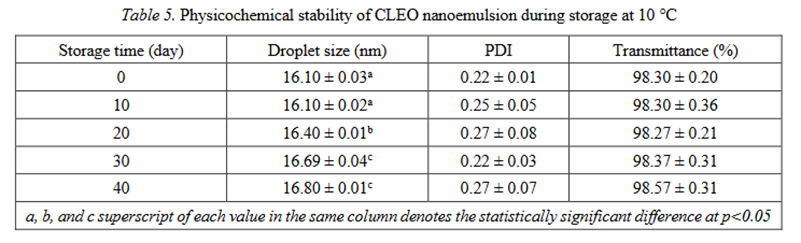
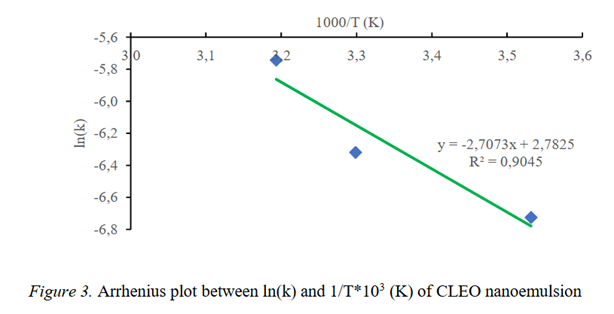
5. Introduction The introduction should be presented immediately after the keywords and must be as concise as possible. It should focus on clarifying the rationale for the research, the theoretical background, and the hypotheses posed. A brief literature review related to the research field should be included; however, a comprehensive and detailed review of the literature should be presented in the discussion section. References should be cited by their corresponding numbers in the reference list, for example: [1] or [1–3]. The first citation of any source should follow the natural numerical order. In particular, a paragraph should not consist of only a single sentence. 6. Material and methods · This section should briefly and precisely describe the methods or procedures used, such that anyone wishing to replicate the experiment can perform it and obtain similar results. · All details should be provided to avoid any ambiguity related to the design, handling, measurement, analysis, etc. · If the method is widely recognized in the field, detailed descriptions are not necessary; instead, the relevant reference should be cited. However, if modifications to a known method were made, they should be clearly described and explained. · A paragraph consisting of only a single sentence should not be presented. 7. Results and discussion · This section should clearly present the observations and provide a brief interpretation of the results. The results should be presented in tables and/or figures whenever possible and should be clearly explained in the text. Note that tables/figures should be placed near their discussion point in the manuscript, not on separate pages. A paragraph consisting of only a single sentence should not be presented. · Figures and illustrations: The figures should be clear, and graphs should not be copied from printed sources. Different graphs should be drawn using the same tool to ensure uniformity in style and caption font size. The measured quantities and units should be clearly indicated on the axes of the graphs. The font size and illustration size should be consistent with the manuscript's font size. · As the journal publishes articles in black and white, if color images/illustrations are submitted, they must still be clear and distinguishable when printed in black and white. 8. Conclusion The conclusion section summarizes the most important findings of the study. Authors should not cite references in this section. 9. Acknowledgment This section is for recognizing the support from organizations or individuals, as well as for declaring any potential conflicts of interest (if any). For example: This research was sponsored and funded by Ho Chi Minh City University of Industry and Trade, under Contract No. xxx/HĐ-DCT dated ... month ... year .... 10. Abbreviation · Use an abbreviation if it appears at least three times in the text, and the abbreviation must be defined at its first appearance. · Define an abbreviation the first time it is used and then use the abbreviation thereafter, not in spelled-out form. 11. Figures and tables · Table or figure presented must be sufficiently clear, well-labeled, and described by its legend to be understood. It is numbered consecutively, starting with Fig. 1 or Table 1. · The legends go above the body of the table; Figure legends go below the graph. Example:
|
12. Nomenclature and units
Follow the international system of units (SI):
· Length, area, volume: mm, cm, m, km, mm2, cm2, m3, µL, mL, L
· Weight: g, kg, ng, µg, mg, kg, t, Da, kDa
· Concentration: nM, µM, mM, M, %, µg/L, mg/L, g/L
· Measurement: space bar is required after number e.g. 5 L, 5 kg, 5 ppm, except for percentage (%) and temperature (°), e.g. 5%, 20°C, 100°F.
· Number decimal rules: allow accuracy of 1%, for examples:
o 100 g, 645 g, 467 g (greater than or equal to 100).
o 99.1 mg, 10.1 mL, 25.5 L (greater than or equal to 10).
o 9.96 mL, 1.12 m3, 1.01 m2 (greater than or equal to 1).
o 0.99, 0.67, 0.013, 0.0052 (less than 1)
13. Nomenclature
All biota (crops, plants, insects, birds, mammals, fish, etc.) should be identified by their scientific names when the English term is first used, with the exception of common domestic animals, e.g., Cyprinus carpio for the first mentioned, later it can be written as C. carpio from the second time.
14. Math formula
· Submit math equations as editable text and not as images.
· Present simple formula in line with normal text where possible and use the solidus (/) instead of a horizontal line for small fractional terms, e.g., X/Y. Authors are encouraged to use Math formulae made by MS. Word function (Insert/Equation) or MathType.
15. In-text citation and reference list
References must have clear sources, be fully cited in the text, and presented according to IEEE format.
- For details, see here: (https://byvn.net/cG48).
Link download | Article example
4. Guidelines for registration
- All manuscripts must be submitted online via the online submission system at ojs.dev.huit.vn.
- First-time users: Please click the register button on the Journal home page (ojs.dev.huit.vn). Enter the requested information to complete your registration. Upon successful registration, an e-mail containing the username and password will be sent to the author. Steps for first-time users:
1. Go to the website: ojs.huit.edu.vn
2. Click on Register in the navigation bar
3. Fill in the form, then click Register
4. To update profile information, log in the Journal website -> click on username in the menu bar -> click View Profile to choose different tabs for updating personal information
- Authors: Please log in to the site using the HUIT Staff Code (for HUIT staff only) or email and password previously provided, before submitting your manuscript. Following the submission, you will be able to track the progress of your manuscript through the system.
5. Guidelines for manuscript submission
1. Log in the Journal website: ojs.huit.edu.vn -> click on username in the menu bar -> click Dashboard -> New Submission
2. Provide preliminary information about your submission.
3. Upload submission file. (Please use template and refer article example to prepare your manuscript)
4. Enter metadata
5. Add co-authors
6. Finish submission